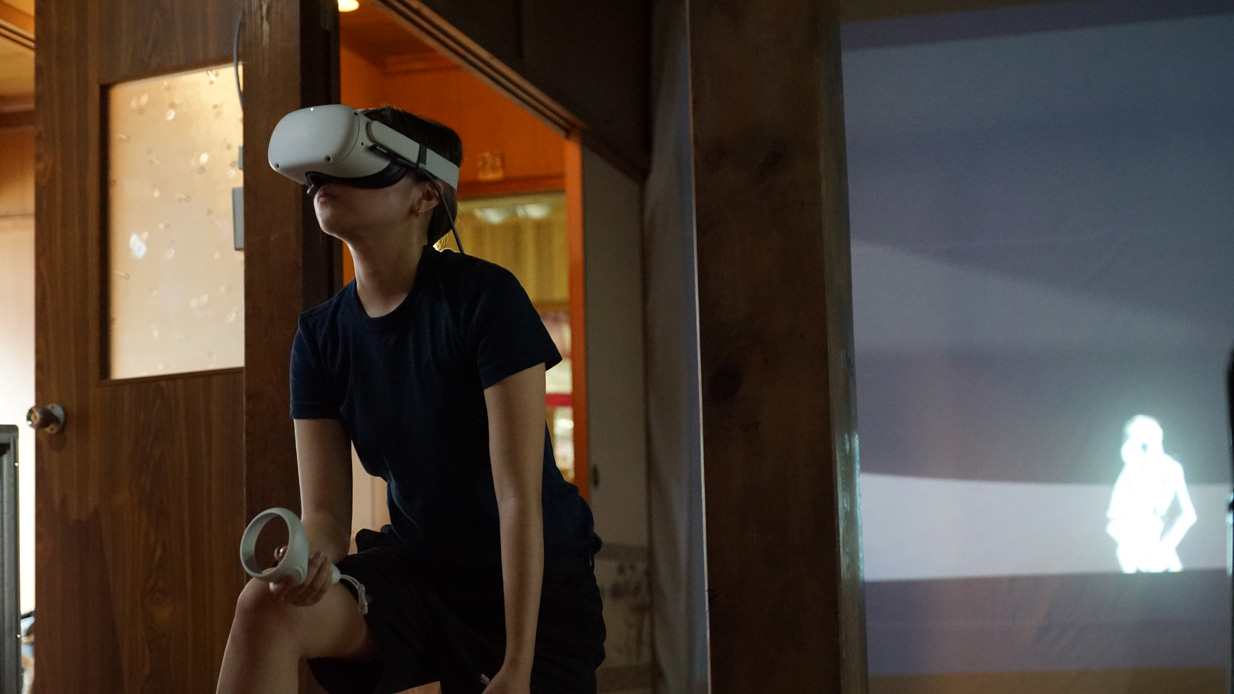
This is a performance piece created for the art event "Art Site Kozushima 2024".
Obsidian, the tool that is said to have facilitated the evolution to bipedal walking, rests in Kozushima island.
There is evidence that humans crossed the ocean from the mainland to Kozushima Island to collect obsidian during the Paleolithic Age, about 38,000 years ago.
This performance was inspired by the artist's own experience of seeing the ocean at Kozushima Island in the middle of the night - an experience that made her feel the vastness and awe of nature.
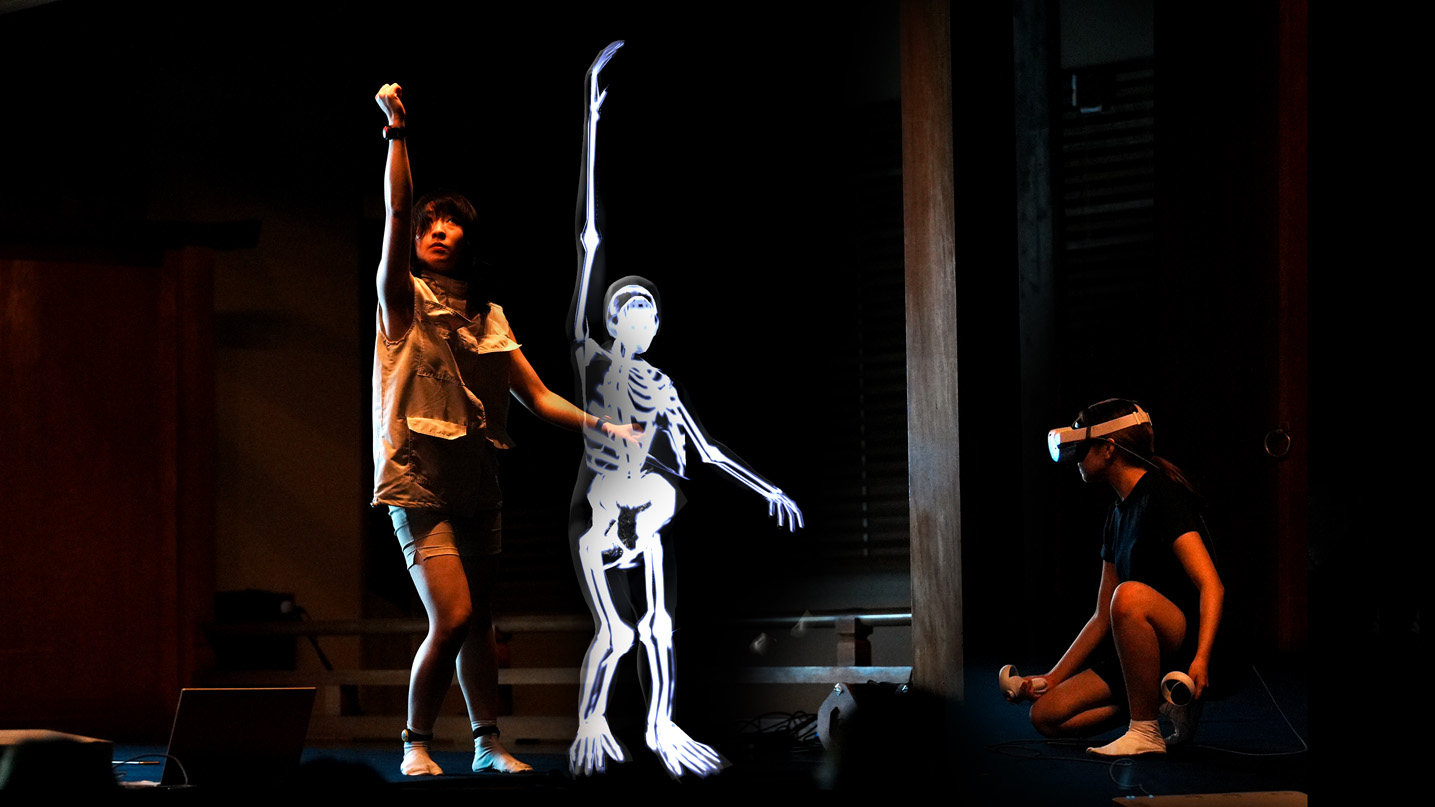
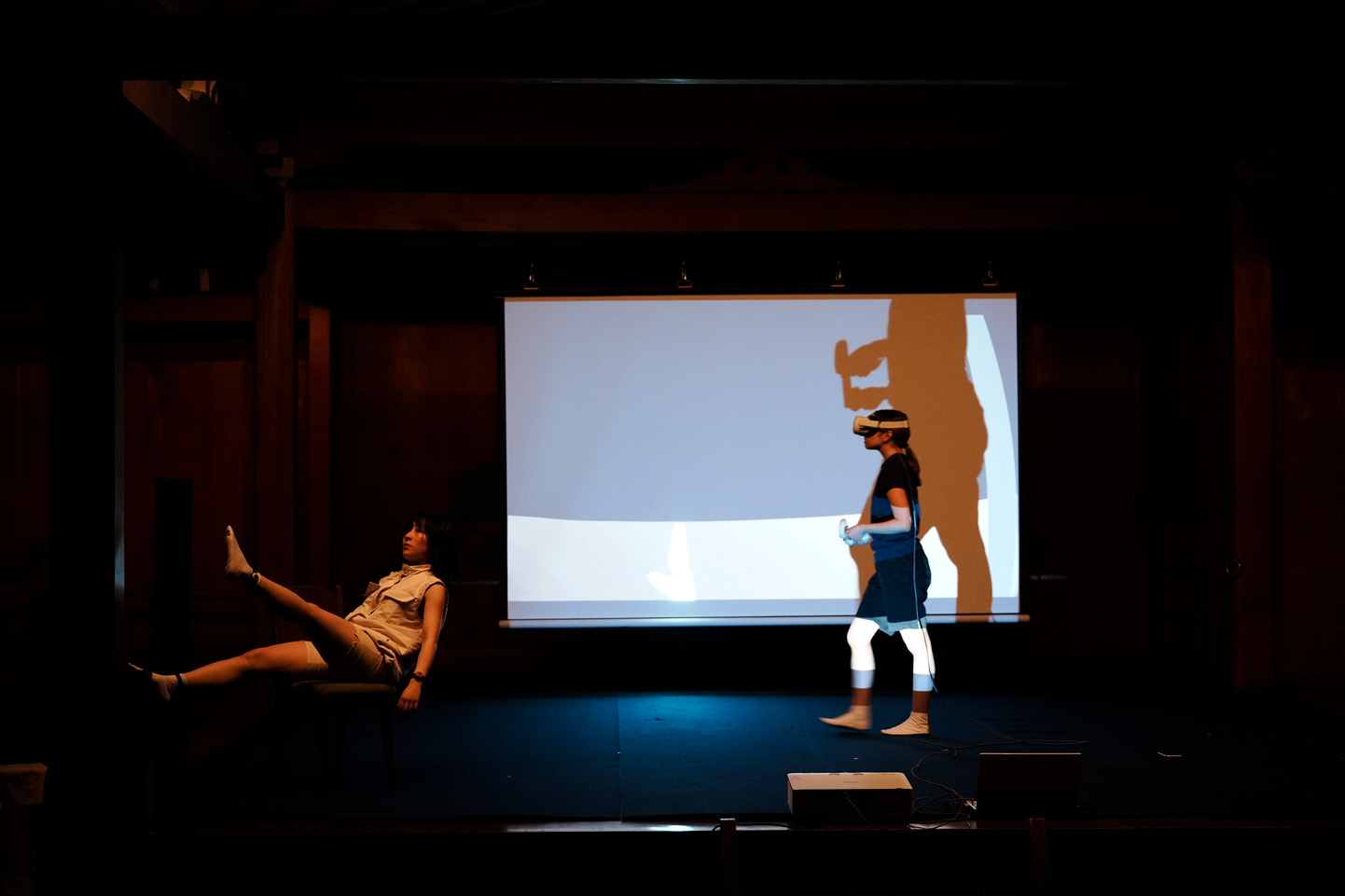
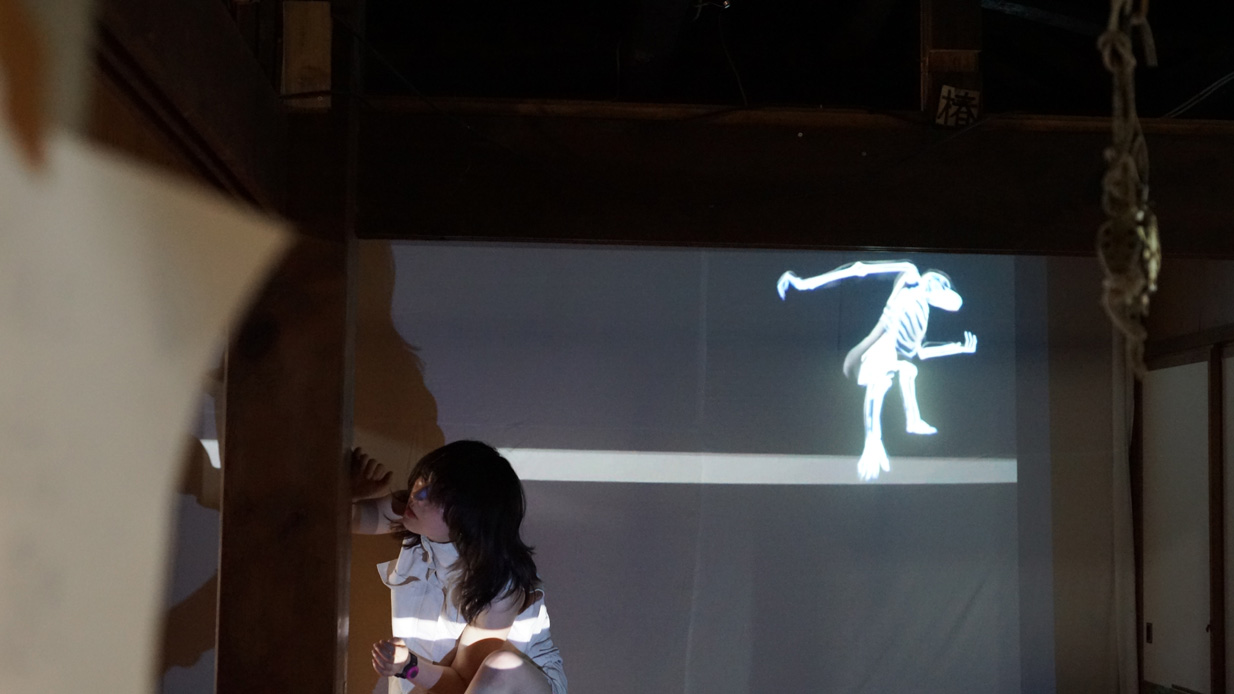
One of the two performers wears a VR device and holds a controller.The view seen through the VR device is projected on the wall.
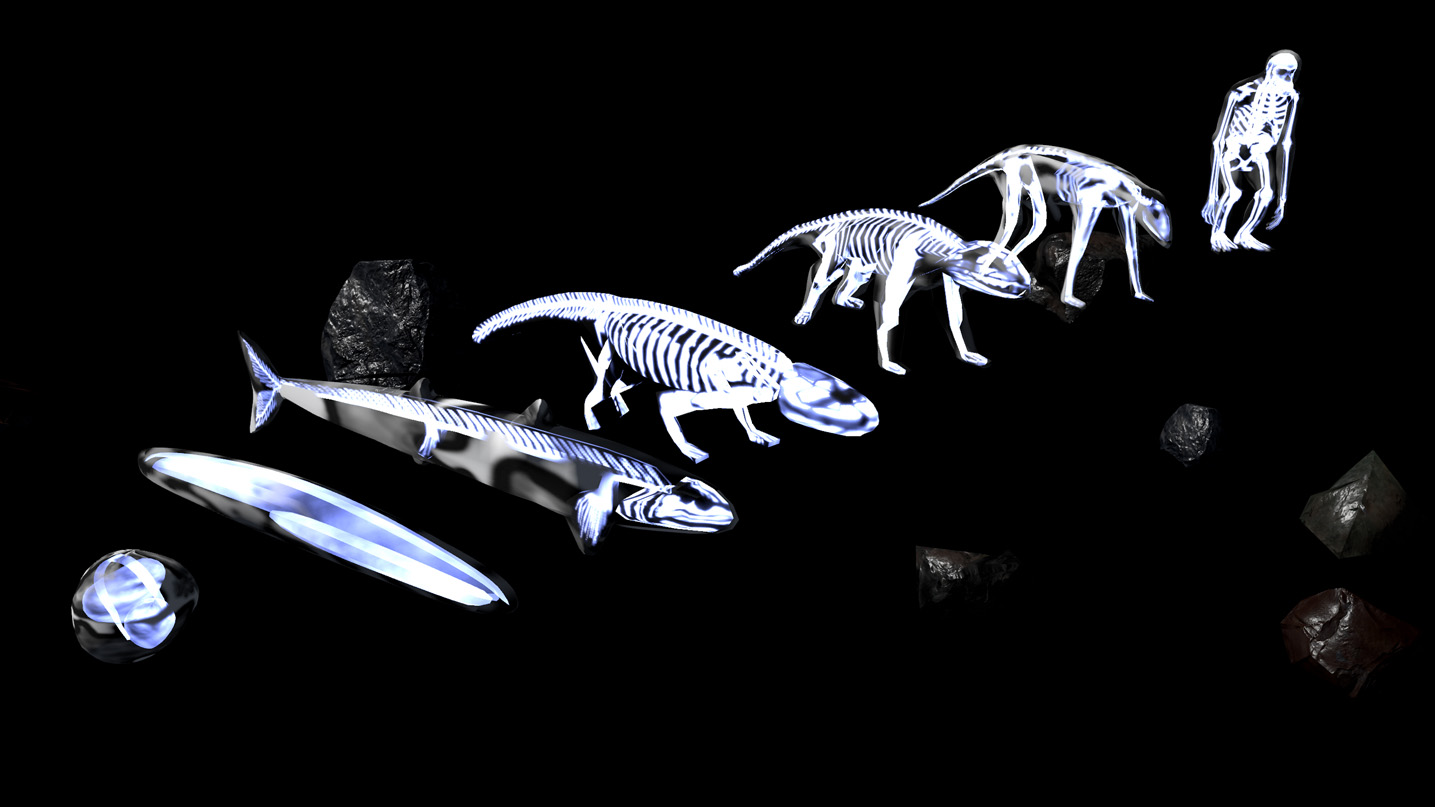
The other wears motion capture. The 3DCG model operating with motion capture changes from single-celled organisms, to fish, to amphibians, to reptiles, and to mammals. This represents the evolutionary process of vertebrates.
After mammals, the model returns to the form of a single-celled organism again, and the sequence is repeated.
This performance encourages us to think about the possibility of ancestral return (atavism) of the human body.
For example, dolphins are said to have become quadrupeds on land and then returned to the sea again becoming swimming bodies.
If, by some natural catastrophe, humans are no longer able to survive on land, they may throw away their smartphones and turn back to the water.